Best Camera and Lens for Long-Term Construction Timelapse
A practical guide to choosing the right camera and lens for construction timelapse: Canon, Nikon, Sony options reviewed with honest advice on where to spend and where to save.
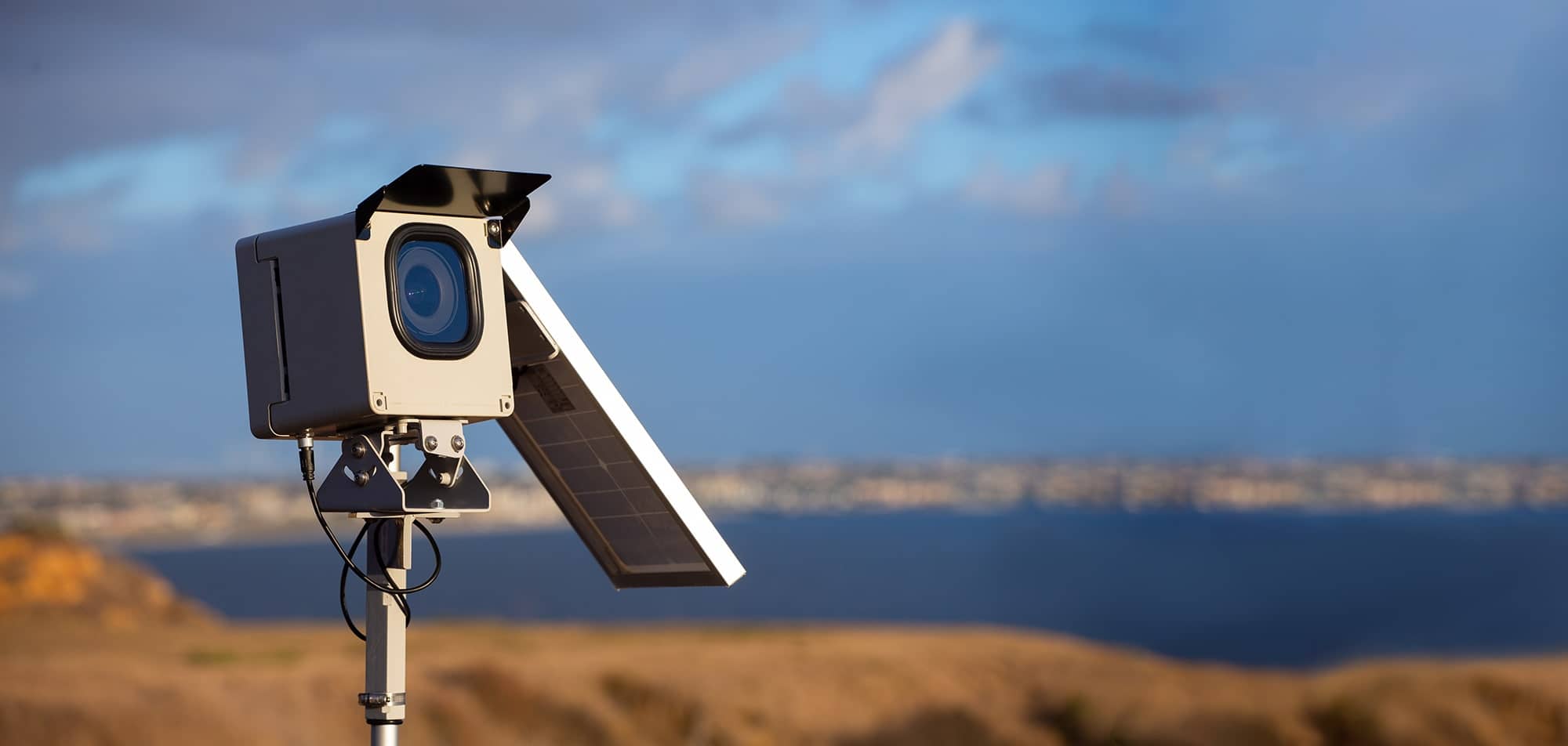
Choosing a camera and lens for long-term construction timelapse is not the same as choosing kit for any other photography work. The camera will spend years locked inside a weatherproof enclosure, firing thousands of times at a set interval, with no one checking on it. Reliability matters more than resolution. Consistency matters more than features.
Here is what works, what does not, and why expensive is often the wrong choice.
Canon and Nikon: The Workhorses of Construction Timelapse
The single most important criterion when selecting a camera for long-term work is reliability. Canon, Nikon, and Sony have all been used on thousands of construction timelapse projects. These are the brands that the industry has converged on, for good reason.
Supported Camera Options
Canon
Canon 2000D / 1500D / Rebel T7. Entry-level DSLR with a 24.1 MP sensor. Pairs well with a Sigma 10-20mm or Tokina 11-16mm wide-angle lens. No built-in intervalometer, but the Buildcam TL controller handles this. Proven on thousands of projects. The practical choice for most commercial builds.
Canon R10. Compact 24.2 MP mirrorless with a built-in timelapse mode. Works well with the 7artisans 12mm f/2.8 or Laowa 10mm. Slightly more flexible than the entry-level DSLRs while remaining cost-effective.
Canon R100. User-friendly 24.2 MP mirrorless with built-in timelapse functionality. Good image quality and a simple interface.
Canon R8. Full-frame 24.2 MP mirrorless with strong low-light performance and a built-in timelapse mode. A step up in quality for projects where the final video output is a major deliverable.
Canon RP. Full-frame camera with excellent low-light performance, built-in image stabilisation, and interval timer. Well suited to projects with significant night-time capture requirements.
Nikon
Nikon Z30. Compact 20.9 MP mirrorless with a built-in interval timer. Often paired with the Laowa 14mm or Nikon Z 16-50mm. A solid entry-level mirrorless option for Nikon-preferring clients. See our full Z30 review for detailed deployment notes.
Sony
Sony ZV-E10. Compact 24.2 MP mirrorless with built-in interval shooting and USB power delivery. Typically paired with the E PZ 16-50mm. Good image quality and a capable entry-level option.
Sony a6700. Versatile 26.0 MP mirrorless with high-quality output, built-in interval shooting, and USB power delivery. For projects where APS-C quality needs to be strong throughout.
Sony a7R IVA. High-resolution 61.0 MP full-frame. Exceptional detail for projects where large-format output is required. Built-in intervalometer and USB power delivery.
Sony a7CR. Compact full-frame 61.0 MP. Incredible resolution, USB power delivery, and a small form factor that sits well in the Buildcam TL housing.
Why Entry-Level Usually Wins
There is a strong case for not spending more than necessary on the camera body itself. Here is the honest argument.
High-quality cameras have high price tags, and depreciate fast. Can you justify $3,500 of camera sitting locked in a weatherproof box for two years? Taking a photo every 15 minutes for eight hours a day over 24 months triggers the camera fewer than 23,000 times. That is not a demanding workload for a DSLR. By the time the project ends, the camera's market value has dropped significantly.
You do not need 99% of the features. Face detection, burst modes, 8K video, advanced stabilisation: these features are irrelevant when the camera is locked on a fixed mount firing at a set interval. The incremental improvements between camera generations do not translate into better timelapse output.
Entry-level cameras produce excellent images. A 24 MP APS-C sensor is sufficient to produce 4K video with room to zoom and reframe in post. The gap between a $600 camera and a $3,500 camera is meaningful for professional photography; it is barely visible in a timelapse video viewed on a screen.
Clients generally do not notice the difference. Clients can distinguish between webcam-quality footage and DSLR footage. They rarely notice the difference between APS-C and full-frame in a finished timelapse video. The editing, pacing, and music matter more than sensor size.
Post-production outweighs camera choice. One of the most effective construction timelapse videos ever made was shot on webcams. The editing made it compelling. A well-edited sequence at 24 MP beats a poorly-edited sequence at 61 MP every time.
For most projects, the recommended configuration is: a Canon or Nikon entry-level DSLR or mirrorless at 24 MP APS-C, paired with a quality wide-angle lens. This setup has been used on thousands of projects worldwide and produces consistently professional results at a cost that makes sense for equipment that will be in the field for years.
Lens Selection
Wide-angle lenses are essential for most construction timelapse positions. You are typically closer to the subject than you would like, or covering a large site from a single vantage point.
Top recommendations:
Sigma 10-20mm f/3.5 (Canon/Nikon EF mount). The standard choice for long-term construction timelapse on APS-C cameras. Wide, sharp, and reliable.
Tokina 12-28mm and 11-16mm. Quality alternatives at comparable pricing. Both have manual focus rings: an important advantage.
Canon EF-S 10-18mm and Nikon DX 10-20mm. Manufacturer own-brand options. Build quality varies; image quality is generally acceptable.
The Focus Ring Problem
This matters more than most people realise. There are two types of focus rings on modern lenses: mechanical (hard stops, can be set and taped in position) and electronic (no hard stops, controlled by the camera's processor).
Mechanical focus rings are the safer choice. You set focus at installation, apply tape, and the lens stays there regardless of what the camera does: reboots, power cycles, firmware quirks.
Electronic focus rings can reset. Every time the camera restarts, which will happen thousands of times over a multi-year project, a lens with an electronic focus ring may reset to a default position. The Nikon 10-20mm resets to infinity, which is usable for most timelapse applications. The Canon EF-S 18-55mm STM has known focus consistency problems that disqualify it from long-term deployments.
If you are considering an electronic focus ring lens, test it extensively for reset behavior before committing it to a project. If in doubt, choose a lens with a mechanical ring that you can physically lock.
The Recommended Configuration
For most long-term construction timelapse deployments:
- Canon or Nikon brand body
- 24 MP APS-C sensor
- Sigma 10-20mm or Tokina wide-angle lens with mechanical focus ring
- Deployed via the Buildcam TL system
This combination is proven on thousands of projects in dozens of countries. It delivers professional-quality output at a cost that is proportionate to the role the camera is actually playing, which is sitting in a box and firing on schedule, reliably, for as long as the project runs.