Five Reasons to Use a Solar-Powered Construction Camera
Why solar power suits construction cameras better than mains supply: mobility, reliability, and less maintenance across the life of a project.
The early milestones of a project are the ones you cannot go back and re-shoot. A slab pour, a first lift, a critical inspection: each one builds on the last, and missing it leaves a gap in the record that never closes.
Consider a site manager who set out to capture a slab pour on a ground-up retail development. The camera ran on mains power. When the images were reviewed later that day, nothing had been captured. The unit had been unplugged for a few days and the whole process had gone unrecorded.
Mains power suits some situations, but it carries complications that can undo you. An electrician unplugs the camera to charge a power tool. A cart clips the plug and pulls it from the socket. An excavator cuts the supply line while trenching. The reason rarely matters. As the person responsible for the site running smoothly, you are the one who has to prevent it, even when the fault is not yours.
The fix in that case was straightforward: move the site cameras fully onto solar. Every key milestone since has been captured. Here are five reasons to do the same.
1. Greater mobility for you and your team
Nobody wants to string extension cords around a job site, and nobody wants a camera tethered to a power source that dictates where it can go. As the project changes and trades move into different areas, a mains-powered camera becomes something you have to keep working around.
Set a solar-powered camera up once, in a well-chosen position, and that problem disappears. You and your superintendent can get on with the work. Part of doing that well is choosing tools that ask for as little attention as possible.
2. A camera that sustains itself
Solar is a cleaner power source, but the real value on a construction site is self-sufficiency. A camera that keeps itself running is one less thing to manage.
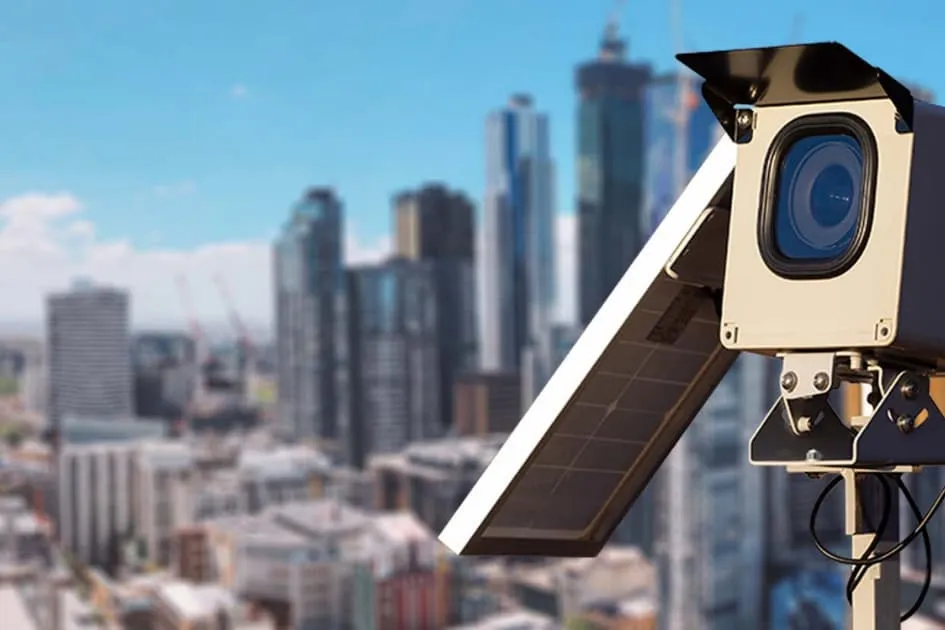
Buildcam cameras come with a single solar panel that is essentially maintenance-free. There is no supply line for a contractor to cut through when dirt is flying, and no socket for anyone to borrow. A robust battery carries the unit through stretches of overcast weather, and the camera tops itself up the next time the sun appears.
3. Mains power on site is never guaranteed
Plenty of projects break ground in remote areas with no power source at all. Tight deadlines push teams to start moving dirt and sort out secondary matters later, when time allows.
The trouble is that secondary matters have a habit of becoming first-order problems as a project runs on. Nobody wants to reach week three and realise the first phase went undocumented, or find they have no visual evidence to support a change order. Solar removes the dependency on a site representative or an electrician granting you access to power. It lets you solve the monitoring question up front and avoid the issue entirely.
4. It reflects good practice on site and in the office
Getting good at the work takes time, experience, and a grasp of the right processes. It also takes adapting to circumstances outside your control, including the shift toward managing sites remotely.
Choosing solar is a small, practical application of proven technology to work more efficiently. The panel is the product of testing and field experience rather than guesswork. Using tools that are known to perform is simply a sensible way to make yourself more effective.
5. Less maintenance over the life of the project
Construction professionals want tools that solve a problem rather than add one. A solar-powered camera is designed to be hands-free after the initial setup.
Your business is construction. The camera's job is to stay out of the way and keep capturing, and solar power is a large part of how it does that. Once it is mounted and running, it should not need you again.
In short
Buildcam sets out to deliver a capable camera that holds up in rugged conditions. The solar panel keeps it charged across the full length of a project, and the unit is built to perform in demanding environments.
As you weigh up your options, think about what a construction camera is there to do: make your work easier, not harder. A solar-powered camera gives you mobility, runs itself, fits the way sites actually operate, and keeps ongoing maintenance to a minimum.