The Evolution of Long-Term Timelapse Technology in Construction
From early camera experiments to AI-powered site analytics: the history of construction timelapse technology and where it is heading next.
In the early days of construction timelapse, capturing progress on a build was little more than an experiment. Photographers would set up a camera on site for a few days, shoot short sequences to show cranes moving or workers pouring concrete, and the results were creative, but far from practical for documenting an entire project.
Consumer gear like the GoPro could produce engaging short clips, but it was never cut out for the demands of a real construction site. Batteries died. Weather destroyed equipment. Image consistency across months was impossible to maintain. The construction industry wanted reliable documentation across entire projects, not just a few days of footage, and that demand drove the evolution of the technology.
The History of Timelapse Photography in Construction
The technique has a longer history than most people realise.
From Science Labs to Job Sites
Timelapse photography began as a scientific tool. By the 1930s, researchers were using it to film plant growth, compressing days of movement into seconds of footage. The principle proved that the world holds stories the human eye cannot see in real time.
The same idea eventually found its way onto building sites. Projects grew larger, timelines stretched longer, and the need for reliable documentation became impossible to ignore. If you were overseeing multiple builds spread across a city, how would you track progress without driving from site to site every week? A fixed-interval camera offered remote oversight that cut travel, reduced costs, and kept stakeholders connected to progress without anyone setting foot on site.
The Last Decade
The past ten years have been transformative.
Stronger mobile network infrastructure made remote access dependable on sites far from urban centers. Cloud platforms meant that images could leap from the camera to a dashboard in seconds. And suddenly, timelapse became a communication tool as much as a documentation tool.
Short, compelling videos showing months of work in a matter of seconds started appearing in boardroom updates, progress review meetings, and social feeds. Construction companies found a new way to build confidence with clients and attract new ones.
360-Degree Coverage
The next step was panoramic vision. Instead of a single fixed perspective, 360-degree timelapse systems gave project teams the ability to look in any direction: no blind spots, clearer decisions, and more transparent conversations between contractors, clients, and investors.
AI-Powered Insights
The current frontier is artificial intelligence. Today's systems do not just capture images. They interpret them.
AI-enabled platforms can flag whether workers are wearing required PPE: hard hats, safety vests, gloves. They can count vehicles on site, distinguish a crane from a loader, and flag unusual activity outside working hours. The data does not just record what happened; it identifies what needs attention.
The Technological Breakthroughs
As the market matured, several innovations transformed long-term timelapse from a creative extra into a core part of project management.
Rugged Enclosures
What once required improvised solutions became professional-grade systems designed to survive years outdoors. IP-rated cases with integrated heating, cooling, and humidity management protect sensitive electronics across the full range of conditions a construction site presents.
Autonomous Controllers
Manual triggering gave way to intelligent controllers that manage scheduling, power, and exposure automatically, capturing on schedule regardless of who is on site, what day it is, or whether the responsible photographer is still employed by the project.
Solar Power and Smart Batteries
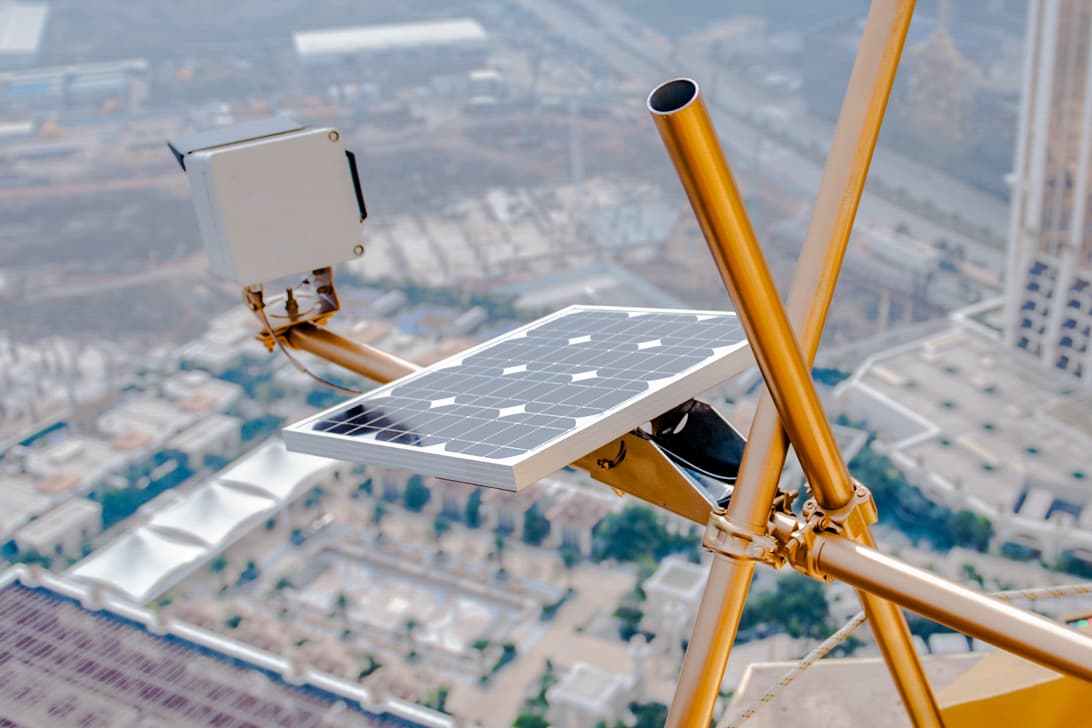
Integrating solar panels with deep-cycle batteries made it possible to deploy in genuinely remote locations: no mains power, no generator, no site visits needed to keep the system running.
Cloud Connectivity
The biggest leap was remote access. Instead of guessing whether a camera was still operational, cloud connectivity made it possible to monitor system health, check recent images, and share progress with stakeholders in near real time, all without visiting the site.
Traditional Methods vs. Modern Practice
Before these technologies, documentation meant periodic site visits, inconsistent photographs, and written reports compiled from memory. It was slow, expensive, and produced a record that could not stand up to serious scrutiny.
Modern timelapse systems changed the standard. Project managers now rely on consistent image quality across years, efficient remote oversight, transparent stakeholder communication, and finished timelapse videos that serve directly as marketing assets.
What Is Coming Next
Several trends are already reshaping the field:
AI milestone detection. Systems will automatically identify and flag major construction phases such as structural completion, fit-out start, and roofing, which removes the need to manually scrub through footage to find key moments.
Virtual reality integration. Timelapse connected to immersive 3D environments will allow stakeholders to experience project progress spatially, not just as a sequence of flat images.
Multi-camera coordination. Arrays of cameras covering an entire site will provide richer, more complete records, particularly valuable for large infrastructure projects where no single vantage point captures everything.
Higher resolution. Sensor technology will continue to improve, producing sharper assets for marketing and sharper evidence for documentation.
Deep integration with project management tools. Timelapse will increasingly be embedded directly into digital workflows, with images and videos surfacing automatically in project platforms without requiring a separate login or export.
Technology That Grew With the Industry
The development of construction timelapse mirrors the growth of the construction industry itself: more connected, more data-driven, and more accountable.
What started as short experiments on job sites has become an essential component of modern project delivery, ensuring a reliable, professional record that serves clients, resolves disputes, protects contractors, and tells the story of what it takes to build something extraordinary.